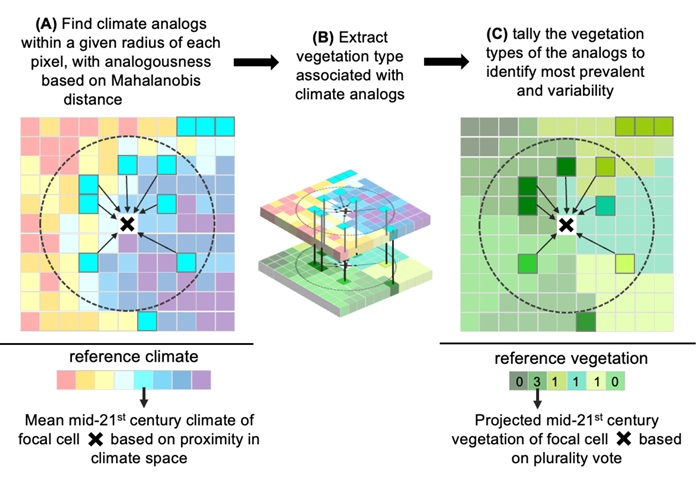
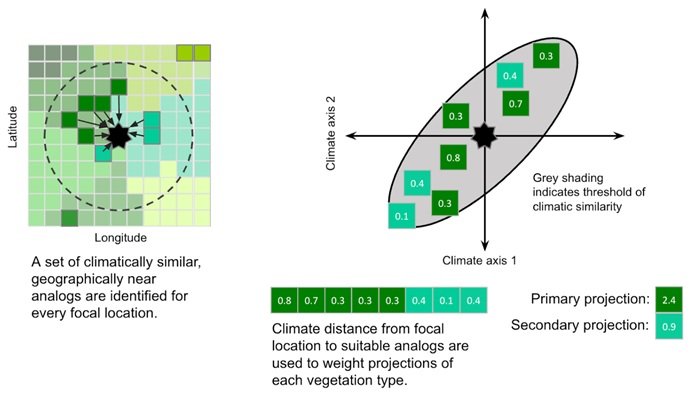
The instinct to dismiss uncertainty is understandable—but in this context, it is misguided. In many modeling contexts, uncertainty means “we don’t know enough to act.” Here, it means something different: the system itself could go in multiple directions, and what happens may depend on what we do.
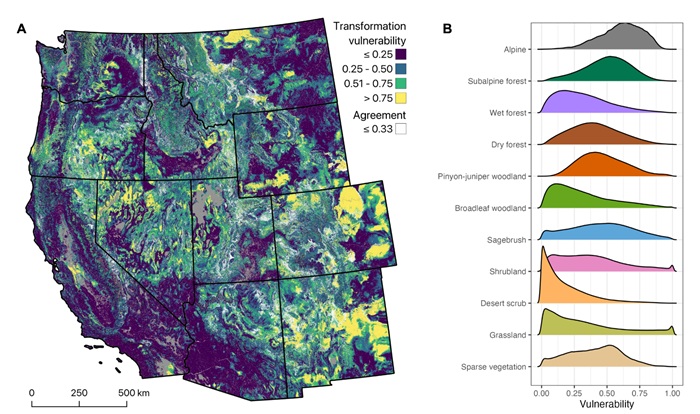
High agreement on a transformation outcome is not reassurance — it is a signal of high model confidence in that change. When the model strongly agrees that a location’s future climate will support a fundamentally different vegetation type, that is a signal of high confidence in transformation—not reassurance. Preparing for that change, rather than resisting it, may be the more realistic path.
Low agreement, on the other hand, does not necessarily mean bad data. It means that multiple vegetation types are climatically plausible at that location. The model is surfacing real biological redundancy—multiple communities can be supported by the same climate—and the vegetation type that ultimately emerges depends on disturbance, seed sources, management, and chance. Low agreement can also indicate that factors other than climate are the stronger driver of vegetation at that location, which is itself important information for managers deciding where and how to intervene.