

About
Learn more about the purpose, people, and principles that guide our work for resilient forests and communities.
Our Vision

We envision forested landscapes across North America that are healthy, fire-adapted, and thriving in a changing climate. In this future, Indigenous stewardship is not an exception but a guiding paradigm. Fire plays its natural role without placing communities at severe risk. And forests continue to provide the broad benefits they always have—habitat, water, carbon storage, recreation, cultural connection, and economic vitality.
This future depends on shared understanding, accessible data, and decisions rooted in the knowledge of the people who live and work on these lands.
Our Approach
Our approach reflects the principles that guide our work across all three pillars.
We believe good science is open, inclusive, and accountable. We share our methods, models, and results so that more people can participate in scientific discovery—not just accessing results, but helping to create, evaluate, and apply scientific knowledge. This openness builds trust between scientists, land managers, Tribal Nations, NGOs, and the public, and strengthens our collective capacity to address complex forest and climate challenges.

We design for the realities of decision-making. Forest managers and tribal natural resource programs often face capacity constraints, fragmented ownership patterns, and urgent timelines. We prioritize actionable science—data and models that are transparent, credible, and fit for purpose—so practitioners can make informed choices, plan effective action in their landscapes, and communicate clearly with their communities.
We tailor support within universal goals. Not all communities face the same barriers or have the same needs. We work toward resilient landscapes for all while directing targeted support to communities that have historically been excluded or under-resourced—whether through dedicated technical assistance, adapted tools, or sustained partnership.

We honor multiple ways of knowing. The most durable solutions arise when Indigenous knowledge, local experience, and Western scientific approaches inform one another. We ground our work in listening, collaboration across disciplines and cultures, and respect for the deep relationships communities hold with their lands.
That relationship—between people and place—is everything. Wendell Berry put it this way:
The answers, if they are to come and if they are to work, must be developed in the presence of the user and the land; they must be developed to some degree by the user on the land. The present practice of handing down from on high policies and technologies developed without consideration of the nature and the needs of the land and the people has not worked, and it cannot work. Good agriculture and forestry cannot be "invented" by self-styled smart people in the offices and laboratories of a centralized economy and then sold at the highest possible profit to the supposedly dumb country people. That is not the way good land use comes about. And it does not matter how the methodologies so developed and handed down are labeled; whether "industrial" or "conventional" or "organic" or "sustainable," the professional or professorial condescension that is blind to the primacy of the union between individual people and individual places is ruinous.
—Wendell Berry, 2010
This conviction shapes how we work and why we believe change is possible.
Theory of Change
Our Theory of Change connects the way we curate data, tell stories, and support practitioners into a simple cycle: open access to high-quality science enables clearer understanding; vivid storytelling and educational tools turn that understanding into shared vision; and shared vision fuels the broad support and coordinated action needed to restore and steward resilient forests.
the future of forests


who we are
Our Team

Oktay has been supporting mission-driven organizations and climate tech innovators his entire career. He was previously the Vice President, PayPal Giving, leading the company's efforts on a mission to increase giving in the world. Under his leadership. PayPal's Giving platform raised more than $21B for nonprofits around the world in 2022.
Before PayPal he was a co-founder and CTO of MissionFish, eBay Inc.’s nonprofit partner powering cause-marketing and donation programs built into eBay properties until its acquisition by eBay in 2011. He also served as the CTO of the Points of Light Foundation, where he focused on building volunteer management and matching systems. Prior to that he was a management consultant at PricewaterhouseCoopers, and worked as an information technology analyst with NASA's Goddard Space Flight Center. He was included in Washingtonian Magazine's list of DC's 2023 Tech Titans, highlighting the most important and innovative leaders in DC's tech scene right now.
He received his B.A. from Johns Hopkins University and his M.S. from Carnegie Mellon University. Contact Oktay.

Chelsey works at the intersection of natural resource management, geospatial data science, and communications. She is passionate about the ability of place and technology to bring data, disciplines, and people together to support inclusive decision making and solve complex challenges.
Across her research and geospatial data science roles in academia, industry, and philanthropy, she has worked closely with stakeholders from government agencies, nonprofit organizations, and communities around the world co-creating models and decision support tools addressing pressing socio-environmental challenges.
She holds an M.S. and Ph.D. from North Carolina State University in forestry and environmental resources and a B.A. from Iowa State University in journalism and mass communications. Contact Chelsey.

Alister brings deep experience in geospatial science, digital storytelling, and full-stack web development to Vibrant Planet Data Commons. He designs interactive tools, web applications, and spatial narratives that transform complex environmental data into accessible, actionable insights. His work supports initiatives in conservation, research, cultural preservation, and land stewardship, in collaboration with nonprofits, researchers, and public agencies.
He is the founder of WayFind LLC, a creative geospatial consultancy focused on mapping, storytelling, and application development. Alister holds a B.S. in Geography (cum laude, minor in Anthropology) from the University of Oregon and a Capstone Certificate in Advanced GIS from the University of Wisconsin–Madison. His professional development also includes software engineering training at Epicodus, a Google UX Design Certificate, and a Certificate in Community Development from Colorado State University. Contact Alister.

Bryce A. Denton is Vibrant Planet Data Commons' Chief Financial Officer. Bryce’s vision to drive consulting partnerships into an immersive and engaging experience led to the founding of Moun10 Partners in late 2010.
Before that, he spent nine years focusing on both operational and strategic applications of financial accounting. For the last 12 years, Bryce has primarily worked with environmental nonprofits and for profit organizations in the outdoor industry. He has worked with global clients such as the Forest Stewardship Council (FSC), High Carbon Stock Approach (HCSA) and the Sustainable Agriculture Network (SAN).
He has a bachelor's degree in accounting and an MBA with a focus on entrepreneurship. He lives and adventures in the mountains of Colorado with his wife, daughter, and beloved black lab.

Michael (Mike) and his wife Denise enjoy their country life south of Dallas, Oregon where they have raised their four children. Mike is a member of the Confederated Tribes of Grand Ronde.
He worked at the Grand Ronde Natural Resources Department for 28 years, the last 15 as Dept. Manager. He has enjoyed the difficult work of protecting tribal sovereignty and rights while promoting tribal economies. He recently left his job with the Grand Ronde to enter a new chapter of semi-retirement and consulting work and projects he is dedicated to.
Mike is currently leading Vibrant Planet Data Common’s work to develop guidelines and practices for sharing Indigenous data.

David has worked professionally at the intersection of forest science, policy, and management since 2008. His work has evolved from reporting on forest carbon markets and climate policy, to developing carbon offset projects and accounting standards, and over the past ten years has involved honing expertise in forest growth-and-yield modeling, geospatial data science, and software engineering.
As a descendant of the Coahuiltecan first peoples of south Texas and northeastern Mexico, David finds particular inspiration pursuing actionable science motivated by the needs and interests of tribal communities and natural resource programs.
David holds a B.A. in Environmental History from Harvard, an M.S. in Soil Science from Oregon State University, and a Ph.D. in Forestry from the University of Washington. David splits his time between Vibrant Planet (a Public Benefit Corporation) and Vibrant Planet Data Commons.

Brittany has built her career around creating lasting, positive impacts for communities, people, and wildlife. Over the past 20 years, she has supported a wide range of ecological monitoring and land stewardship programs with the National Park Service and in the nonprofit sector, developing a deep appreciation for science-based stewardship and the systems that support effective conservation. Most recently, she managed a complex grant portfolio and team budget for the Bird Conservancy of the Rockies’ Stewardship Team. At the core of her work, Brittany strives to create and maintain practical processes that enable teams to focus on outcomes and work more effectively together. Outside of work, Brittany enjoys staying connected to the land by growing and preserving food from her garden; mentoring new hunters in the field; and camping, gardening, and nature-ing with her family.
Our Board

Alex has spent five years as a Research Manager on Meta's Data for Good team. This team released over 25 privacy-protecting datasets to assist with natural disasters, public health, poverty, and climate change. Before that Alex led the growth team at a startup scaling the company to 35 countries over 3 years. Prior to this he worked on access to information and Internet programs for 6 years at an international NGO called IREX; first in Ukraine, next in Namibia, and then in Washington DC. He served as a Peace Corps volunteer teaching mathematics in Namibia from 2006 to 2008. Alex holds a BS in physics from the University of Illinois, and an MS from the University of Michigan (where he also taught astronomy.) He has served as a board member of School to School International since 2016 and as chair since 2021.

Brent is the Climate Forest Lead for HP Inc. She has two decades’ experience working in collaboration to restore, protect, and improve the management of forested ecosystems. Brent’s expertise is in leading collaborations of diverse entities to identify shared priorities, develop long-term, science-based strategies, secure resources, and implement targeted conservation solutions. She has co-created a series of ecosystem service finance opportunities for climate-smart land managers; these include a tropical butterfly farm, certified timber cooperative, carbon offset methodology, and salmon recovery fund. At HP, Brent is leading the implementation of the corporation’s 2030 Forest Goals, which include sourcing fiber exclusively from responsibly managed forests and investing in forest conservation projects through partnerships around the world. Prior to joining HP, Brent held leadership roles VP Data Commons and before that at Ecotrust, a nonprofit working at the intersection of equity, economy, and the environment. Brent holds a Master of Science from the University of Washington and enjoys applying her experience to the management of her family’s forestland in Oregon.

Dr. Andrew Schroeder is the Vice President of Research and Analysis for Direct Relief and the Co-Director of the CrisisReady project at the Harvard Data Science Initiative. For the past 16 years he has been an international leader in humanitarian response, global health, spatial technologies, and data analysis. His work has been published or featured in publications including Science, The Lancet Digital Health, New York Times, Washington Post, Fast Company, Motherboard Vice, Wired, The New Humanitarian, American Journal of Public Health, Prehospital and Disaster Medicine, and the International Journal of Cancer. Dr. Schroeder has worked in a consulting and advisory capacity for the United Nations Development Program (UNDP) and the World Food Programme (WFP). He is also the co-founder of the global nonprofit WeRobotics.org, which builds local capacity in robotics applications for humanitarian aid, development, and global health in over 40 countries around the world.

Bill is a Professor of Forest Ecology and Forestry at the University of Vermont. There he directs the Carbon Dynamics Laboratory and is a Fellow in the Gund Institute for Environment. His research spans a range of fields related to forest conservation and sustainability. These include forest ecosystem dynamics, forest fires and disturbance ecology, riparian ecology, forest carbon and climate, old-growth forests, and ecologically-based forestry practices. Geographically Dr. Keeton works in several regions of the U.S., as well as eastern Europe, the Himalayan Mountain Region, and Chilean Patagonia. He chairs the IUFRO (International Union of Forest Research Organizations) Working Group on Old-growth Forests, and serves on the boards for Science for the Carpathians and the Vermont Land Trust. Bill worked as a Fulbright Specialist in Ukraine (2008) and was awarded a Fulbright Scholarship to Austria (2021). He recently co-edited the book “Ecology and Recovery of Eastern Old-Growth Forests,” published by Island Press (2018). He holds a B.S. in Natural Resources from Cornell University (’90), a Masters in Conservation Biology and Policy from Yale University (’94), and a Ph.D. in Forest Ecology from the University of Washington (2000).
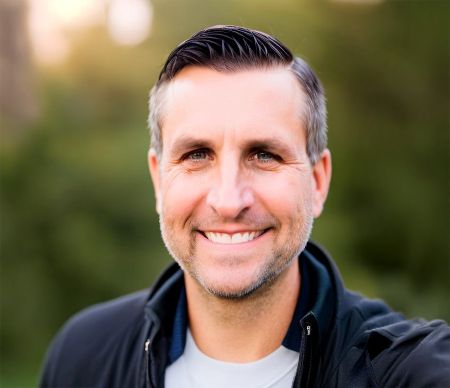
Bryan Van Stippen is the Program Director for the National Indian Carbon Coalition, an initiative of the
Indian Land Tenure Foundation that provides education, training, and technical assistance to Tribal
Nations and Indigenous communities to develop nature-based solutions on Tribal land. A member of the
Oneida Nation of Wisconsin, Bryan previously served as Tribal Attorney for the Ho-Chunk Nation
Department of Justice in Wisconsin, where he was responsible for land acquisition and other land-
related issues. He earned a Bachelor’s Degree in Business Administration and a Master's in Computer
Information Systems from Tarleton State University in Texas. Bryan is a graduate of the University of
North Dakota School of Law (J.D.), the University of Tulsa College of Law (LL.M. in American Indian and
Indigenous Law), and the University of Arizona James E. Rogers College of Law (S.J.D in Indigenous
Peoples Law & Policy). He lives with his wife and two children in Green Bay, Wisconsin.
Bryan is a representative on the 1t.org US Stakeholder Council, an appointed representative on the
Greenhouse Gas Technical Advisors Group, a Legacy Member of the Ecosystem Service Marketplace
Consortium, and a representative on the Bipartisan Policy Center Farm and Forest Carbon Solutions Task
Force.
Oktay has been supporting mission-driven organizations and climate tech innovators his entire career. He was previously the Vice President, PayPal Giving, leading the company's efforts on a mission to increase giving in the world. Under his leadership. PayPal's Giving platform raised more than $21B for nonprofits around the world in 2022. Before PayPal he was a co-founder and CTO of MissionFish, eBay Inc.’s nonprofit partner powering cause-marketing and donation programs built into eBay properties until its acquisition by eBay in 2011. He also served as the CTO of the Points of Light Foundation, where he focused on building volunteer management and matching systems. Prior to that he was a management consultant at PricewaterhouseCoopers, and worked as an information technology analyst with NASA's Goddard Space Flight Center. He was included in Washingtonian Magazine's list of DC's 2023 Tech Titans, highlighting the most important and innovative leaders in DC's tech scene right now. He received his B.A. from Johns Hopkins University and his M.S. from Carnegie Mellon University.